
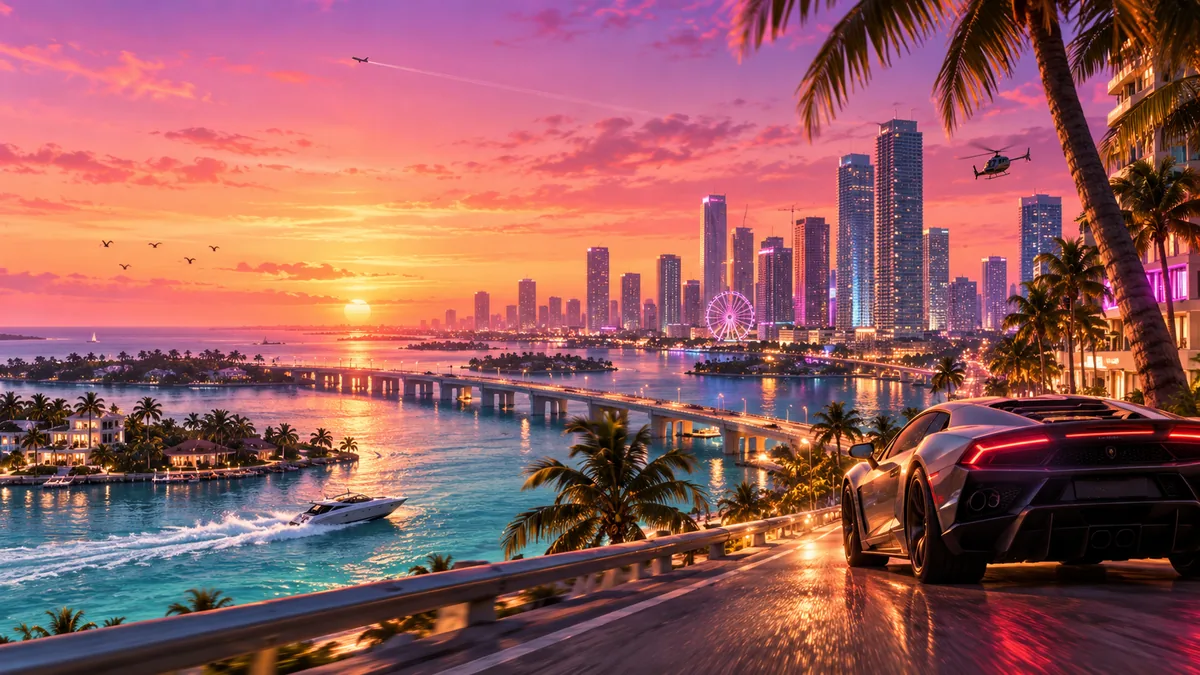
25 Best Open-World Games of All Time, Ranked
Open-world games make a simple promise that few other genres can match: see that place in the distance, and you can probably go there.
But freedom alone does not make a great open world.
Some games give players enormous maps filled with little reason to explore them. The best open-world games make the journey itself worthwhile. They create curiosity, reward experimentation, tell stories through landscapes and give players enough freedom that two people can walk away with very different memories of the same adventure.
For this Meshtainment ranking, we considered more than visual quality or map size. Exploration, player freedom, world density, environmental storytelling, quest design, systemic gameplay, replayability, historical influence and long-term reputation all matter.
That means groundbreaking older games can outperform technically superior newer releases, while modern titles still earn credit when they genuinely move open-world design forward.
From fantasy kingdoms and post-apocalyptic wastelands to modern cities, alien oceans and roads across Mexico, these are our picks for the 25 best open-world games of all time.
What Is the Best Open-World Game of All Time?
Red Dead Redemption 2 is Meshtainment’s pick for the best open-world game of all time. Rockstar’s Western combines extraordinary environmental detail, believable wildlife and settlements, memorable characters, organic exploration and one of gaming’s strongest open-world narratives. Other games offer greater mechanical freedom, but few make a virtual world feel as convincingly alive.
25 Best Open-World Games: Quick Ranking
| Rank | Game | Release Year | Best For |
|---|---|---|---|
| 1 | Red Dead Redemption 2 | 2018 | Living world |
| 2 | The Witcher 3: Wild Hunt | 2015 | Storytelling |
| 3 | The Legend of Zelda: Breath of the Wild | 2017 | Exploration |
| 4 | Elden Ring | 2022 | Discovery and combat |
| 5 | Grand Theft Auto V | 2013 | Urban sandbox |
| 6 | The Elder Scrolls V: Skyrim | 2011 | Role-playing freedom |
| 7 | The Legend of Zelda: Tears of the Kingdom | 2023 | Creative freedom |
| 8 | Minecraft | 2011 | Sandbox creativity |
| 9 | Fallout: New Vegas | 2010 | Choice and role-playing |
| 10 | Cyberpunk 2077 | 2020 | Futuristic city |
| 11 | Grand Theft Auto: San Andreas | 2004 | Historical influence |
| 12 | Metal Gear Solid V: The Phantom Pain | 2015 | Systemic stealth |
| 13 | Ghost of Tsushima | 2020 | Samurai adventure |
| 14 | No Man’s Sky | 2016 | Space exploration |
| 15 | Subnautica | 2018 | Survival exploration |
| 16 | Forza Horizon 5 | 2021 | Open-world driving |
| 17 | Kingdom Come: Deliverance II | 2025 | Historical RPG immersion |
| 18 | Far Cry 3 | 2012 | Open-world action |
| 19 | Horizon Forbidden West | 2022 | Visual spectacle |
| 20 | Dying Light | 2015 | Parkour survival |
| 21 | Batman: Arkham City | 2011 | Superhero world design |
| 22 | Assassin’s Creed IV: Black Flag | 2013 | Naval exploration |
| 23 | Death Stranding | 2019 | Traversal |
| 24 | Sleeping Dogs | 2012 | Martial-arts action |
| 25 | Just Cause 2 | 2010 | Sandbox destruction |
25. Just Cause 2
Developer: Avalanche Studios
Original Release: 2010
Platforms: PC, PlayStation 3, Xbox 360
Best For: Explosive sandbox freedom
Long before enormous open worlds became routine, Just Cause 2 understood something surprisingly important: sometimes the map should simply be a playground.
Its fictional Southeast Asian archipelago of Panau is enormous, varied and intentionally designed around movement. Rico Rodriguez’s grappling hook and parachute transform traversal into part of the entertainment rather than something players merely tolerate between missions.
The game rarely asks you to interact with its world delicately. Instead, military installations, fuel tanks, communication towers and vehicles become ingredients in elaborate chains of destruction.
That freedom helped Just Cause 2 stand apart from more structured open-world action games of its era. Hijacking a helicopter, grappling onto a moving vehicle or launching yourself from a mountain can be more entertaining than following the objective marker.
Its weaknesses are equally obvious today. Characters and storytelling are secondary, many activities repeat themselves, and the world lacks the intimate detail of newer sandboxes.
But measured by pure open-world playfulness, it remains influential.
Why it still matters: Just Cause 2 demonstrated that traversal mechanics and emergent chaos could carry an open-world experience even when narrative depth was not the priority.
Players who value experimentation, movement and destruction over tightly written quests will understand immediately why Panau earned a place on this list.
24. Sleeping Dogs
Developer: United Front Games
Original Release: 2012
Platforms: PC, PlayStation 3, Xbox 360; Definitive Edition on PC, PlayStation 4 and Xbox One
Best For: Martial-arts combat
Many crime sandboxes tried to follow Grand Theft Auto. Sleeping Dogs succeeded because it developed a personality of its own.
Its version of Hong Kong is smaller than many modern open worlds, but that compact scale works in its favor. Night markets, neon-lit streets, highways, apartment districts and crowded commercial areas give the city a distinctive character without forcing players to cross huge stretches of empty terrain.
More importantly, the game centers its action around hand-to-hand combat.
Environmental finishers, counters and martial-arts combinations make street fights feel dramatically different from the gun-heavy encounters typical of the genre. Driving and shooting still matter, but melee combat gives the game its identity.
The undercover-police storyline also provides more emotional weight than its premise initially suggests, while side activities help sell the fantasy of navigating two conflicting lives.
The Definitive Edition later bundled the game’s additional content and brought it to newer platforms.
Some systems now show their age, and the open world cannot match today’s largest cities for simulation depth.
Yet Sleeping Dogs remains one of gaming’s best examples of why location, combat identity and atmosphere can matter more than map size.
23. Death Stranding
Developer: Kojima Productions
Original Release: 2019
Platforms: PlayStation 4, PlayStation 5, PC, Xbox Series X|S
Best For: Traversal
Most open-world games treat travel as the space between interesting things.
Death Stranding makes travel the interesting thing.
Mountains, rivers, rocky valleys and steep inclines become logistical problems. Players study terrain, balance cargo, place ladders, build structures and gradually establish routes through an environment that initially feels hostile.
That changes the relationship between player and map. A hill is not simply scenery. It may determine what equipment you carry, which path you select and how much risk you are willing to accept.
The asynchronous online system adds another layer. Infrastructure created by other players can appear in your world, giving cooperation a presence without requiring traditional multiplayer sessions.
It is undeniably divisive. Long delivery sequences, deliberate pacing and unusual storytelling will not appeal to everyone.
But as an open-world design experiment, Death Stranding is remarkably confident.
Its Director’s Cut expanded the experience for PS5, while the game has also reached additional platforms since its original PlayStation release.
Why it still matters: It proved that traversal itself could become an entire open-world gameplay system rather than simply a method of reaching the next mission.
22. Assassin’s Creed IV: Black Flag
Developer: Ubisoft Montreal
Original Release: 2013
Platforms: PC, PS3, PS4, Xbox 360, Xbox One, Wii U; later Nintendo Switch through The Rebel Collection
Best For: Naval exploration
Few open-world games capture the pleasure of seeing an unknown island on the horizon and immediately changing course quite like Assassin’s Creed IV: Black Flag.
The Caribbean setting transformed Ubisoft’s familiar historical-action structure by placing naval travel at the center of the experience.
Sailing the Jackdaw, hunting for treasure, boarding enemy ships, exploring islands and upgrading your vessel create a satisfying loop in which the world feels connected by adventure rather than separated by loading screens.
The game still contains recognizable Assassin’s Creed ingredients: stealth, climbing, assassination missions and historical conspiracies. Yet its pirate fantasy frequently overshadows the franchise around it.
Edward Kenway’s story also gives the adventure more emotional grounding than a simple pirate power fantasy might suggest.
The biggest drawback is structural repetition. Some mission types rely too heavily on familiar trailing or eavesdropping mechanics, which can clash with the freedom offered by the open sea.
Still, Black Flag remains one of Ubisoft’s strongest open worlds because its traversal method, progression and setting reinforce each other.
It is not merely an Assassin’s Creed game with boats. The boats fundamentally change what exploring the map feels like.
21. Batman: Arkham City
Developer: Rocksteady Studios
Original Release: 2011
Platforms: PC, PS3, Xbox 360; later Wii U, PS4, Xbox One and Nintendo Switch releases
Best For: Superhero fantasy
Batman: Arkham City is proof that an open world does not need to be enormous.
Rocksteady created a relatively compact district packed with rooftops, alleys, industrial structures, landmarks and criminal activity. Because Batman can grapple rapidly between buildings and glide above the streets, nearly every part of the environment contributes to his movement.
That relationship between character abilities and world design is the game’s greatest strength.
Detective systems, stealth encounters and free-flow combat are not isolated mechanics. They make the city itself feel like Batman’s territory.
The environment also communicates story through architecture and atmosphere. Different districts develop recognizable identities, while villains occupy spaces that reflect their personalities.
Compared with today’s huge superhero games, Arkham City can feel constrained. But that density is precisely why it works so well.
Why it still matters: The game became a reference point for modern superhero action design. Its influence can be felt in combat systems, traversal mechanics and open-world structures well beyond Batman games.
For players who prefer a dense world filled with meaningful encounters over a gigantic map, Arkham City remains remarkably effective.
20. Dying Light
Developer: Techland
Original Release: 2015
Platforms: PC, PlayStation 4, Xbox One, Nintendo Switch; playable across additional newer hardware through compatibility
Best For: Parkour survival
Open-world zombie games existed long before Dying Light, but few made movement so central to survival.
Techland’s fictional city of Harran is designed around rooftops, balconies, narrow alleys and climbable structures. Parkour allows players to vault over obstacles and escape enemies without constantly relying on vehicles.
During daylight, exploration encourages scavenging and experimentation. At night, stronger threats dramatically alter the atmosphere and make familiar streets feel dangerous.
That day-night transformation gives the world a sense of changing rules rather than functioning as a static backdrop.
Crafting and weapon degradation can become repetitive, and the narrative is less memorable than the mechanical systems surrounding it. But the moment-to-moment experience of navigating Harran remains excellent.
The biggest achievement is simple: movement feels satisfying even when no mission is active.
That quality separates strong open worlds from ordinary ones.
Players who want survival mechanics without sacrificing speed and mobility will still find Dying Light one of the genre’s most entertaining combinations.
19. Horizon Forbidden West
Developer: Guerrilla Games
Original Release: 2022
Platforms: PlayStation 4, PlayStation 5, PC
Best For: Visual spectacle and machine combat
Horizon Forbidden West expands nearly every part of its predecessor.
Its post-apocalyptic American frontier moves between tropical coastlines, forests, deserts, ruins and towering mountains while filling those landscapes with extraordinary mechanical wildlife.
The machines remain the central attraction. Fighting them is less about reducing a health bar and more about identifying components, exploiting elemental weaknesses and deciding which parts to remove.
Exploration also improves through climbing tools, underwater environments and later traversal options that make the map increasingly flexible.
The world can occasionally feel over-designed. Icons, resources and activities compete for attention, and players tired of traditional checklist structures may find portions familiar.
Yet few open-world action games deliver such a polished combination of combat variety, environmental detail and spectacle.
The Complete Edition includes the Burning Shores expansion and is available on PS5 and PC, while the base game remains available on PS4 and PS5.
Players looking for one of the most technically accomplished open-world adventures available on modern hardware should not overlook it.
18. Far Cry 3
Developer: Ubisoft Montreal
Original Release: 2012
Platforms: PC, PS3, Xbox 360; later PS4 and Xbox One through Classic Edition
Best For: Open-world action
Many design conventions associated with 2010s open-world games became widespread after Far Cry 3.
The tropical Rook Islands combine hostile outposts, wildlife, hunting, crafting, vehicles, stealth and unscripted firefights into a structure that continually encourages players to improvise.
An enemy base can be approached quietly, attacked directly or thrown into chaos by manipulating the wildlife nearby.
Those possibilities are where Far Cry 3 shines.
Its towers and map-reveal systems were copied so frequently across the industry that they eventually became symbols of formulaic design. That can obscure how effective they felt when this game helped popularize them.
The story contains memorable performances but also reflects assumptions and narrative choices that have aged less gracefully than the mechanical design.
Still, its influence is difficult to dismiss.
Why it still matters: Far Cry 3 helped establish the template for an entire generation of open-world action games: capture bases, gather resources, unlock abilities and create your own stories between scripted missions.
Later Far Cry titles are larger and technically more sophisticated, but the third game remains the clearest expression of the formula.
17. Kingdom Come: Deliverance II
Developer: Warhorse Studios
Original Release: 2025
Platforms: PC, PlayStation 5, Xbox Series X|S
Best For: Historical RPG immersion
Kingdom Come: Deliverance II approaches open-world role-playing with an unusual priority: convincing the player that the world exists independently of them.
Its medieval setting emphasizes routines, social status, equipment, survival and consequences. Characters react to behavior and appearance, while combat demands more patience than the immediate power fantasies of many fantasy RPGs.
That friction is part of the appeal.
Where many games streamline everyday actions to keep the story moving, Kingdom Come often finds role-playing value in those details.
The sequel also benefits from greater production confidence than its predecessor. Towns feel richer, quest design offers interesting variations, and the world supports a wide range of approaches to problems.
Its realism can still become demanding. Players wanting instant gratification may find the early hours deliberately restrictive.
For role-playing fans, however, that gradual growth makes achievement feel earned.
Because it is significantly newer than most titles on this list, its long-term influence remains difficult to judge. That keeps it below genre-defining classics for now.
Even so, it already deserves recognition as one of the strongest modern examples of historically grounded open-world role-playing.
16. Forza Horizon 5
Developer: Playground Games
Original Release: 2021
Platforms: Xbox One, Xbox Series X|S, PC, PlayStation 5
Best For: Open-world driving
Open-world games do not have to revolve around combat.
Forza Horizon 5 turns a stylized recreation of Mexico into an enormous automotive playground where the act of driving is its own reward.
Deserts, jungles, cities, coastlines and volcanic terrain give the map visual variety, while hundreds of vehicles encourage experimentation.
Players can race competitively, explore casually, perform stunts, collect cars or spend hours tuning vehicles without engaging deeply with the festival campaign.
Accessibility is another major strength. Driving assists make the game approachable to newcomers while simulation options give experienced players more control.
The festival atmosphere can occasionally feel relentlessly upbeat, and players wanting a serious motorsport structure may prefer the mainline Forza Motorsport series.
But measured specifically as an open world, Horizon 5 succeeds because almost every road creates an opportunity.
The game’s audience expanded significantly when Forza Horizon 5 launched for PlayStation 5 in April 2025, with cross-platform play supported.
For racing fans, this remains the benchmark open-world road trip.
15. Subnautica
Developer: Unknown Worlds Entertainment
Original Release: 2018
Platforms: PC, PlayStation, Xbox, Nintendo Switch
Best For: Survival exploration
The ocean is one of gaming’s most effective sources of mystery, and Subnautica understands exactly how to exploit it.
Players begin near the surface of an alien planet where colorful reefs create an almost peaceful atmosphere. Exploration gradually pushes deeper, where darkness, pressure and unfamiliar creatures make every expedition more unsettling.
Progression emerges naturally from curiosity.
New materials allow better equipment. Better equipment allows deeper exploration. Deeper exploration reveals new mysteries.
That loop rarely needs constant objective markers because the environment itself creates motivation.
Base building and resource management support the experience without completely overwhelming it, while vehicles dramatically expand the scale of exploration.
Combat is deliberately less important than in many survival games. This keeps attention on navigation, preparation and discovery.
Technical rough edges have existed across versions, but the fundamental design is outstanding.
Subnautica succeeds because the player frequently explores not because a checklist says to, but because they genuinely want to know what is down there.
Few open worlds generate curiosity so effectively.
14. No Man’s Sky
Developer: Hello Games
Original Release: 2016
Platforms: PC, PlayStation, Xbox, Nintendo Switch and newer-generation variants
Best For: Space exploration
The story of No Man’s Sky cannot be separated from its evolution.
Its 2016 launch became controversial because the initial experience did not meet expectations created before release. What followed, however, was years of substantial updates that dramatically expanded the game.
Today, its procedurally generated universe supports exploration, building, trading, survival, multiplayer interaction, expeditions, spacecraft ownership and a growing collection of systems.
The sheer scale is difficult to compare directly with handcrafted open worlds. Planets are generated rather than individually constructed, so repetition can become noticeable.
But scale is not the only achievement.
Hello Games created an environment where leaving one planet, entering space and landing somewhere completely different can happen with remarkable continuity.
That creates a particular fantasy few competitors can match.
Players who require carefully authored quests and dense environmental storytelling may prefer The Witcher 3 or Red Dead Redemption 2.
Players fascinated by exploration for its own sake can lose enormous amounts of time simply asking, “What is on the next planet?”
Why it still matters: Its long-term transformation has become one of the industry’s clearest examples of sustained post-launch development reshaping a game’s reputation.
13. Ghost of Tsushima
Developer: Sucker Punch Productions
Original Release: 2020
Platforms: PlayStation 4, PlayStation 5, PC
Best For: Samurai adventure
Ghost of Tsushima understands that navigation can be atmospheric rather than purely functional.
Instead of relying entirely on a minimap, players can follow the wind toward objectives. Birds, smoke, landmarks and other environmental cues help make exploration feel connected to the landscape.
That seemingly small decision gives Tsushima an unusual visual purity.
Fields bend in the wind, forests explode with color, shrines sit above dangerous climbs and distant landmarks constantly invite investigation.
Combat is equally important. Swordplay emphasizes timing, stances and controlled aggression, while stealth offers an alternative approach when direct confrontation becomes difficult.
The game does not completely escape familiar open-world structure. Enemy camps, collectibles and repeated activities remain part of the experience.
But strong artistic direction makes those conventions feel more cohesive than they do in many competitors.
The Director’s Cut adds Iki Island and additional content, and Ghost of Tsushima is now available across PS4, PS5 and PC.
For players who want a cinematic open-world adventure without sacrificing satisfying combat, it remains one of PlayStation’s strongest modern releases.
12. Metal Gear Solid V: The Phantom Pain
Developer: Kojima Productions
Original Release: 2015
Platforms: PC, PlayStation 3, PlayStation 4, Xbox 360, Xbox One
Best For: Systemic stealth
Few open-world games provide as many ways to solve a single tactical problem as Metal Gear Solid V: The Phantom Pain.
A mission might begin with reconnaissance from a distant hill. Players can mark guards, choose an infiltration route, wait for darkness, disable communications, use distractions, extract enemies or attack directly.
Then the systems collide.
Weather changes visibility. Guards adapt to repeated tactics. Equipment opens new possibilities. Companion abilities alter the shape of encounters.
The actual open environments are less densely populated than the worlds ranked above it, and traveling between missions can sometimes feel empty.
But the spaces exist primarily as tactical arenas rather than sightseeing destinations.
That distinction matters.
The Phantom Pain remains extraordinary because so many of its mechanics interact predictably enough for players to devise strategies the game never explicitly instructs them to use.
Konami’s current product information continues to list the game across PC, Xbox One, PS4, Xbox 360 and PS3.
Its narrative structure remains controversial among series fans, but mechanically it is one of the most flexible stealth sandboxes ever created.
11. Grand Theft Auto: San Andreas
Developer: Rockstar North
Original Release: 2004
Platforms: Originally PS2; subsequently PC, Xbox and numerous later console/mobile editions
Best For: Historical influence
It is difficult to remember how ambitious Grand Theft Auto: San Andreas felt in 2004.
Rather than focusing on one city, Rockstar created an entire fictional state connecting Los Santos, San Fierro, Las Venturas, countryside, desert and smaller communities.
Players could customize CJ, improve skills, exercise, eat, gamble, drive, fly, swim, purchase property and spend hours ignoring the central story.
Today, many of those systems seem normal.
At the time, their combination was remarkable.
San Andreas also understood variety. Leaving Los Santos for rural roads radically changes the atmosphere. Reaching Las Venturas later feels like entering a different game.
The original technology has naturally aged. Combat and controls can feel rough by modern standards, and subsequent versions have produced mixed reactions among longtime fans.
That does not diminish its historical importance.
Why it still matters: San Andreas helped establish expectations that modern open-world games should offer more than missions. Players wanted customization, side activities, different regions and systems that supported a virtual life outside the storyline.
Its influence can still be seen throughout the genre.
10. Cyberpunk 2077
Developer: CD Projekt Red
Original Release: 2020
Platforms: PC, PS4, PS5, Xbox One, Xbox Series X|S, Nintendo Switch 2
Best For: Futuristic city exploration
Few games demonstrate the difference between launch reputation and long-term reputation as dramatically as Cyberpunk 2077.
Its 2020 release was damaged by major technical problems, particularly on older consoles. Years of updates, systemic improvements and the Phantom Liberty expansion substantially changed the experience.
Night City is the reason it earns a top-10 position.
Towering architecture, dense streets, markets, corporate districts and neglected neighborhoods create one of gaming’s most visually distinctive urban environments.
The city feels vertical in ways many open worlds do not.
Character builds also provide meaningful flexibility. Cyberware, weapons, stealth, hacking and mobility can produce very different approaches to combat and exploration.
Not every building can be entered, and the city sometimes creates the illusion of greater simulation depth than it actually supports. That prevents it from ranking alongside Rockstar’s most reactive worlds.
Still, the atmosphere and narrative density are formidable.
As of 2026, Cyberpunk 2077 has continued expanding its platform reach and post-launch availability, including Xbox Game Pass support beginning in March 2026.
For players seeking a technologically extravagant open-world RPG, modern Cyberpunk 2077 is a dramatically stronger proposition than the game that originally launched.
9. Fallout: New Vegas
Developer: Obsidian Entertainment
Original Release: 2010
Platforms: PC, PlayStation 3, Xbox 360; playable through compatibility on supported Xbox hardware
Best For: Choices and consequences
Fallout: New Vegas is not the prettiest open-world game on this list.
It may be one of the smartest.
Obsidian’s Mojave Wasteland is built around factions, competing ideologies, reputation systems and quests that frequently allow several solutions.
Combat ability is only one path.
Speech, stealth, character statistics, faction relationships and prior decisions can dramatically alter situations.
That makes the world unusually responsive to role-playing.
New Vegas also benefits from a strong sense of geography. Settlements, military positions and faction territories reflect the wider political conflict rather than existing simply because the map needs another activity.
Its aging technology creates obvious problems. Animations, shooting and technical performance are less polished than later RPGs.
Yet the game’s greatest strengths are structural rather than visual.
Why it still matters: New Vegas remains a frequent reference point whenever players discuss meaningful choice in open-world RPGs. Decisions are valuable because they alter relationships and opportunities rather than simply changing a line of dialogue.
For players who value role-playing freedom above presentation, it remains exceptional.
8. Minecraft
Developer: Mojang Studios
Original Release: 2011
Platforms: PC, PlayStation, Xbox, Nintendo Switch and mobile platforms
Best For: Sandbox creativity
Most games on this list give players a world.
Minecraft gives players the ability to reshape it.
That distinction explains its extraordinary longevity.
A new world can become a survival adventure, building project, multiplayer community, engineering experiment or essentially an entirely different game through servers and modifications.
Creative mode removes resource restrictions for builders, while Survival turns the same landscapes into environments where gathering, crafting and preparation matter. Mojang officially continues to support Java and Bedrock editions across a wide range of current platforms.
Minecraft’s procedurally generated terrain lacks the authored storytelling of Red Dead Redemption 2 or The Witcher 3.
But authored storytelling is not its goal.
Instead, players create stories through what they build, discover and survive.
That freedom has allowed the game to remain relevant across generations of hardware and audiences.
Why it still matters: Minecraft helped redefine what a sandbox game could be. Its influence extends beyond survival games into education, multiplayer communities, user-generated content and creative software.
Measured purely by player agency, almost nothing else on this list can compete.
7. The Legend of Zelda: Tears of the Kingdom
Developer: Nintendo
Original Release: 2023
Platforms: Nintendo Switch, Nintendo Switch 2
Best For: Creative problem-solving
How do you follow one of the most influential open-world games ever made?
Nintendo’s answer was not simply to create a larger map.
Tears of the Kingdom turns Hyrule into a playground for experimentation.
Ultrahand allows objects to be combined into vehicles and machines. Fuse changes how weapons and materials interact. Ascend turns ceilings into potential traversal routes. Recall manipulates movement through time.
These abilities constantly encourage players to ask whether a problem can be solved in a completely unintended way.
The expanded world adds sky islands and the underground Depths, creating multiple vertical layers of exploration.
Not every area feels equally fresh to players who spent extensive time in Breath of the Wild, and inventory management can interrupt experimentation.
But the systemic freedom is extraordinary.
The Switch 2 Edition, released June 5, 2025, added higher resolution, smoother performance and faster loading while retaining the original adventure.
Tears of the Kingdom ranks below Breath of the Wild here for one reason: its predecessor produced the larger historical shift.
Mechanically, however, Nintendo’s sequel may be the more astonishing game.
6. The Elder Scrolls V: Skyrim
Developer: Bethesda Game Studios
Original Release: 2011
Platforms: PC, PlayStation, Xbox and Nintendo Switch across multiple editions
Best For: Role-playing freedom
Few open-world introductions communicate possibility as efficiently as stepping into Skyrim and realizing you can simply walk away from the expected path.
Bethesda’s frozen province is packed with caves, ruins, towns, guilds, mountains, dragons and unmarked discoveries.
Its greatest trick is distraction.
You might start traveling toward a quest objective and spend the next two hours investigating a ruin, joining a faction and discovering an entirely unrelated storyline.
That unpredictability gives Skyrim extraordinary replayability.
Character building is also deliberately permissive. Players can become warriors, mages, thieves, archers or strange combinations without committing immediately to a rigid class.
Modern players will notice dated combat, repeated dungeon architecture and NPC behavior that sometimes breaks the illusion.
But longevity matters.
Skyrim has remained culturally visible through re-releases, modding communities and countless player-created experiences because the underlying world is unusually accommodating.
Why it still matters: Skyrim helped define the modern fantasy sandbox by prioritizing player-directed adventure over tightly controlled progression.
Many games offer more sophisticated storytelling or better combat. Few create such an effortless sense that adventure could begin in any direction.
5. Grand Theft Auto V
Developer: Rockstar North
Original Release: 2013
Platforms: PC, PS4, PS5, Xbox One, Xbox Series X|S; originally PS3 and Xbox 360
Best For: Urban sandbox freedom
More than a decade after its original release, Los Santos remains one of gaming’s most recognizable virtual cities.
Grand Theft Auto V succeeds because its world supports multiple scales of experience.
You can participate in elaborate story missions, race through the city, fly over mountains, explore underwater areas, play sports, modify vehicles or simply observe the chaos created by traffic, pedestrians and police systems.
The three-protagonist structure also allows Rockstar to move between different personalities and lifestyles without abandoning the same world.
Its satire can be deliberately excessive, and some mission design feels more restrictive than the freedom available outside missions.
That tension has always been one of GTA’s contradictions: an incredibly flexible sandbox surrounding carefully scripted story sequences.
Yet the overall achievement remains extraordinary.
Rockstar’s official site currently lists GTA V on PS5, Xbox Series X|S and PC alongside prior PS4 and Xbox One versions, with newer feature upgrades on the latest hardware.
GTA Online dramatically extended the world’s lifespan, but even viewed solely as a single-player open world, Los Santos remains a landmark.
4. Elden Ring
Developer: FromSoftware
Original Release: 2022
Platforms: PC, PlayStation 4, PlayStation 5, Xbox One, Xbox Series X|S
Best For: Discovery and challenging combat
Elden Ring solved one of open-world design’s most persistent problems: how do you encourage exploration without turning the map into a checklist?
Its answer is curiosity.
A strange tower, distant castle, glowing tree or suspicious ruin often becomes enough motivation to investigate.
The Lands Between rarely tells players exactly what they will find.
That uncertainty makes discovery meaningful.
FromSoftware also uses difficulty differently from many open-world RPGs. When one encounter becomes overwhelming, players can leave, explore elsewhere, improve their character and return stronger.
That freedom makes the studio’s demanding combat surprisingly compatible with an enormous map.
Dungeons range from small caves to extraordinary legacy areas that could anchor entire games themselves.
The design is not flawless. Reused enemies become increasingly noticeable late in the adventure, and some questlines are so cryptic that many players will require outside guidance.
Still, the sense of mystery is unmatched.
Why it still matters: Elden Ring demonstrated that open worlds do not need to drown players in objective markers. Strong visual design and meaningful rewards can guide exploration organically.
Few games make getting lost feel this valuable.
3. The Legend of Zelda: Breath of the Wild
Developer: Nintendo
Original Release: 2017
Platforms: Nintendo Switch, Wii U, Nintendo Switch 2 Edition
Best For: Exploration
Breath of the Wild changed how many developers thought about open worlds.
Hyrule is not simply large. It is designed around physical possibility.
Players can climb most surfaces, glide from high points, manipulate objects, exploit weather, use fire, experiment with physics and frequently solve problems without following the designer’s most obvious route.
That creates a powerful sense of ownership over exploration.
The game’s towers reveal geography but do not automatically cover the map with activity icons. Players look at the landscape, identify something interesting and choose a route themselves.
The weapon-durability system remains divisive, while traditional Zelda fans may prefer the larger handcrafted dungeons of earlier games.
But its broader influence is undeniable.
Developers across the industry adopted elements of its climbing, gliding, environmental interaction and less restrictive exploration philosophy.
Nintendo later released a Switch 2 Edition with improved performance, higher resolution and faster load times.
Why it still matters: Breath of the Wild shifted the conversation from “How much content is on the map?” toward “How freely can players interact with the world?”
That makes it one of the most historically important open-world games ever made.
2. The Witcher 3: Wild Hunt
Developer: CD Projekt Red
Original Release: 2015
Platforms: PC, PlayStation, Xbox, Nintendo Switch; Switch 2 version announced with the 2026 remaster
Best For: Storytelling and quests
Many open-world games contain hundreds of side quests.
The Witcher 3 made players care about them.
Its greatest achievement is not the size of Velen, Novigrad or Skellige. It is the quality of stories hidden throughout those spaces.
A seemingly ordinary contract can reveal moral ambiguity, tragedy or an unexpected character study.
That gives exploration narrative value.
Geralt’s role as a monster hunter also fits open-world structure perfectly. Traveling between villages, investigating supernatural threats and preparing for encounters makes the world feel connected to his profession rather than simply providing activities.
Combat is less refined than the best action RPGs, and movement can occasionally feel awkward.
But characters, atmosphere and quest design remain exceptional.
The Hearts of Stone and Blood and Wine expansions strengthened an already enormous experience.
As of September 2026, an important update is approaching: The Witcher 3: Wild Hunt — Remastered is scheduled for September 29, 2026 on PC, PS5 and Xbox Series X|S, with a native Switch 2 version also planned. CD Projekt says the remaster will be a free upgrade for qualifying existing owners; the newly announced Songs of the Past expansion is planned for 2027.
Why it still matters: The Witcher 3 raised expectations for narrative quality in open-world side content. Developers could no longer assume optional meant forgettable.
1. Red Dead Redemption 2
Developer: Rockstar Games
Original Release: 2018
Platforms: PlayStation 4, Xbox One, PC; playable on newer PlayStation and Xbox hardware through compatibility
Best For: Living-world immersion
Red Dead Redemption 2 earns the top position because virtually every element of its design contributes to the illusion that its world exists beyond the player.
Animals hunt each other.
Towns develop recognizable rhythms.
Travelers appear along roads.
Weather changes the character of landscapes.
Small encounters can emerge without announcing themselves as major content.
Rockstar’s fictional American frontier stretches across mountains, forests, swamps, plains, settlements and growing industrial cities, but scale alone is not what makes it remarkable.
The detail does.
Arthur Morgan’s relationship with the Van der Linde gang gives the enormous world an emotional center. Camp conversations, missions and quieter moments gradually create a sense of community that makes the larger story significantly more powerful.
The game is deliberately slow.
Looting requires animation. Travel takes time. Weapons need maintenance. Arthur moves with physical weight rather than arcade-like responsiveness.
Some players find those choices restrictive.
For others, they are exactly what makes the world convincing.
Red Dead Redemption 2 does not offer Minecraft’s unlimited creativity, Elden Ring’s combat, Zelda’s systemic puzzle solving or The Witcher 3’s quest density.
What it offers is cohesion.
Its landscapes, characters, wildlife, animation, sound, storytelling and simulation work together in a way few open-world games have matched.
That is why, for Meshtainment, Red Dead Redemption 2 is the best open-world game of all time.
Meshtainment Editor’s Picks
Best Open-World Game Overall: Red Dead Redemption 2 — The strongest overall combination of storytelling, environmental detail, atmosphere and believable world simulation.
Best Open-World RPG: The Witcher 3: Wild Hunt — Exceptional quest writing and meaningful character stories make exploration consistently rewarding.
Best Open-World Story: Red Dead Redemption 2 — Arthur Morgan’s journey gives Rockstar’s enormous frontier unusual emotional weight.
Best Open-World Game for Exploration: The Legend of Zelda: Breath of the Wild — Hyrule consistently encourages players to choose their own destination and discover their own route.
Best Open-World Game for Beginners: Forza Horizon 5 — Extensive assists and a flexible structure make its enormous driving playground approachable without becoming shallow.
Best Open-World Game for PC: Cyberpunk 2077 — On capable hardware, Night City combines dense visual design, flexible character builds and one of gaming’s most distinctive futuristic environments.
Best Open-World Game for PlayStation: Ghost of Tsushima Director’s Cut — A polished combination of exploration, combat and cinematic presentation.
Best Open-World Game for Xbox: Forza Horizon 5 — Playground Games’ Mexico remains one of the strongest showcases for open-world driving.
Best Open-World Game for Nintendo Switch / Switch 2: The Legend of Zelda: Tears of the Kingdom — Extraordinary systemic creativity and a world that invites constant experimentation.
Best Open-World Multiplayer Game: Minecraft — Few games provide comparable freedom for friends to build, explore and create their own objectives together.
Best Open-World Survival Game: Subnautica — Exploration, survival progression and environmental mystery reinforce each other beautifully.
Best Open-World Driving Game: Forza Horizon 5 — Fast cars are only part of the appeal; its roads, environments and activity structure turn driving itself into exploration.
What Makes a Great Open-World Game?
A huge map is not automatically a good map.
The best open worlds create a relationship between space, mechanics and player curiosity.
1. Meaningful Exploration
Exploration should lead to something worthwhile.
That reward might be equipment, story information, a beautiful location, a difficult encounter or simply a memorable experience.
If exploration consistently produces nothing but repeated collectibles, curiosity eventually disappears.
2. A World You Can Read
Great environments communicate information visually.
Mountains suggest destinations. Smoke suggests activity. Architecture reveals culture. Roads imply movement.
Games such as Breath of the Wild and Elden Ring are especially effective because players can often select destinations simply by observing the landscape.
3. Freedom of Approach
Open worlds become more convincing when problems support multiple solutions.
Metal Gear Solid V allows tactical improvisation.
Tears of the Kingdom encourages mechanical creativity.
Minecraft barely defines a solution at all.
Player choice transforms a map from scenery into a system.
4. Strong Traversal
If players spend dozens of hours crossing a world, movement needs to be enjoyable.
Spider-Man-style web swinging, Zelda’s climbing and gliding, Dying Light’s parkour, Forza’s driving and Death Stranding’s hiking all demonstrate how traversal can become gameplay.
5. Memorable Places
A gigantic world becomes meaningless when every area looks interchangeable.
Strong open-world games create identifiable regions with their own atmosphere, architecture and gameplay possibilities.
Think of Saint Denis in Red Dead Redemption 2, Novigrad in The Witcher 3 or Night City in Cyberpunk 2077.
6. Compelling Side Content
Optional activities should feel genuinely optional rather than mandatory chores.
The Witcher 3 remains a benchmark because side quests frequently contain enough character development and narrative complexity to rival main missions.
7. Systems That Interact
The most memorable open-world moments are often unscripted.
Weather, wildlife, enemies, physics, vehicles and NPC behavior can combine in ways developers did not explicitly stage.
Those interactions make the world feel dynamic instead of mechanical.
Open-World Games vs. Sandbox Games: What’s the Difference?
The terms open world and sandbox overlap, but they are not identical.
An open-world game primarily describes world structure. Players can explore a large environment with relatively few restrictions on movement or mission order.
A sandbox game emphasizes player experimentation. The game provides systems, objects or tools that can be combined creatively.
For example, Red Dead Redemption 2 is clearly open world but comparatively structured in its story missions.
Minecraft is both open world and a sandbox because players can freely explore while radically altering the environment.
Tears of the Kingdom also sits comfortably between both definitions. Its Hyrule is open for exploration, while its physics and building mechanics encourage sandbox experimentation.
The best sandbox games are therefore often open world, but an open world does not automatically make a game a sandbox.
Frequently Asked Questions
What is the best open-world game of all time?
Meshtainment ranks Red Dead Redemption 2 as the best overall because of its extraordinary world detail, characters, environmental storytelling and simulation. Players prioritizing RPG systems may prefer The Witcher 3, while exploration-focused players may choose Breath of the Wild or Elden Ring.
What open-world game has the best story?
Red Dead Redemption 2 and The Witcher 3: Wild Hunt are two of the strongest choices. Red Dead Redemption 2 focuses on a deeply developed central narrative, while The Witcher 3 excels at both its main story and unusually strong side quests.
What open-world game offers the most freedom?
Minecraft arguably provides the greatest overall freedom because players can reshape much of the world itself. Tears of the Kingdom is another standout for creative problem-solving, while Skyrim offers exceptional role-playing freedom.
What is the best open-world RPG?
Our pick is The Witcher 3: Wild Hunt, followed closely by Elden Ring and Fallout: New Vegas. Each emphasizes a different aspect of role-playing: storytelling, exploration and combat in The Witcher 3; combat and discovery in Elden Ring; and dialogue choices and faction politics in New Vegas.
What is the biggest open-world game?
“Biggest” depends on how size is measured. Procedurally generated games such as No Man’s Sky operate at a scale fundamentally different from handcrafted maps. For that reason, physical map size is not a particularly useful measure of open-world quality.
Is GTA V still worth playing?
Yes. GTA V remains one of gaming’s strongest urban sandboxes, particularly for players who have never experienced its single-player campaign or Los Santos. Some mechanics show their age, but the variety of vehicles, activities and environmental systems remains impressive.
Is Red Dead Redemption 2 better than GTA V?
For storytelling, atmosphere, characters and environmental realism, Meshtainment gives Red Dead Redemption 2 the advantage. GTA V offers faster pacing, greater vehicle variety and a more chaotic urban sandbox. The better choice depends heavily on what kind of open world you enjoy.
Is Elden Ring really an open-world game?
Yes. Elden Ring uses a large, freely explorable world called the Lands Between where players can choose routes, delay difficult encounters and discover optional regions, bosses and dungeons in different orders.
What is the best open-world game for beginners?
Forza Horizon 5 is one of the easiest recommendations because its adjustable assists and flexible structure allow newcomers to explore at their own pace. Minecraft in Creative mode is another extremely approachable option.
What is the best open-world game on PS5?
Red Dead Redemption 2 remains our overall favorite despite being a PS4-era release running through compatibility, while Ghost of Tsushima Director’s Cut, Horizon Forbidden West, Cyberpunk 2077 and Elden Ring are excellent choices with modern PlayStation support.
What is the best open-world game on Xbox?
Forza Horizon 5 is our platform-specific Xbox recommendation, while Red Dead Redemption 2, Elden Ring, Cyberpunk 2077, Skyrim and GTA V offer very different styles of open-world play.
What is the best open-world game on Nintendo Switch 2?
The Legend of Zelda: Tears of the Kingdom – Nintendo Switch 2 Edition is our top choice. Its Switch 2 version includes higher-definition visuals, smoother performance and faster loading than the original Switch release.
Final Verdict
The best open-world games succeed because they make players curious.
Sometimes that curiosity comes from a mountain in the distance.
Sometimes it comes from a strange character standing beside a road, a hidden cave, an unknown planet, a suspicious underwater trench or the realization that a ridiculous homemade vehicle might actually work.
That is also why there can never be one universal definition of the perfect open world.
The Witcher 3 excels at storytelling. Breath of the Wild prioritizes exploration. Minecraft offers astonishing creative freedom. Elden Ring rewards discovery. Forza Horizon 5 makes driving an adventure.
And Red Dead Redemption 2, our number-one choice, brings world simulation, atmosphere, character and storytelling together with remarkable consistency.
The best open world is ultimately the one that makes you forget the objective marker and wonder what might happen if you simply head in another direction.
Stay tuned for more updated like these at Meshtainment.


